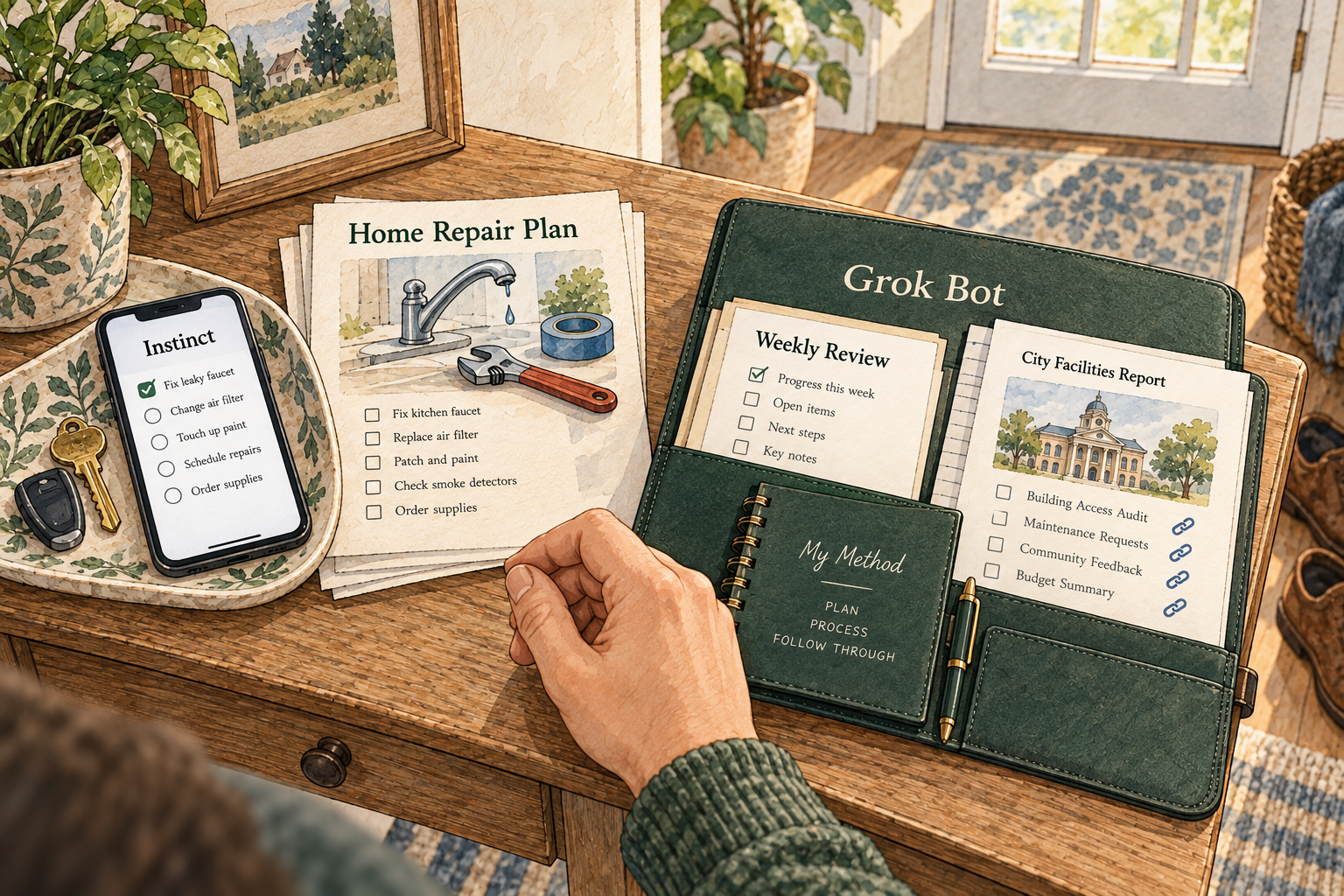
Instinct is pitched around everyday follow-through: you text or call a personal assistant that can work across connected services. Grok Bot is organized around named teammates with continuing jobs. If you are deciding between them, start with the kind of handoff you want to make.
For personal coordination, Instinct’s low-friction communication may be appealing. For a repeating research or document responsibility, Grok’s named roles and reusable methods may fit better. Those are practical interpretations of their public descriptions, not claims that either product is incapable of the other job.
Instinct publishes less detailed operating guidance than Grok in the sources we reviewed. That is a meaningful comparison finding. We can describe its stated approach and concrete data terms, but cannot responsibly invent a price, integration catalog or universal approval policy to fill the gaps.
The differences at a glance
| Decision | Instinct | Grok Bot |
|---|---|---|
| Starting interaction | Text or call the assistant | Message a named Bot in the app |
| Work organization | Personal context and everyday follow-through | Named roles with ongoing responsibilities |
| Published repeat-work method | Proactive assistance is described; detailed scheduler behavior not established | Skills and routines are documented |
| Access detail | Connected apps and devices, depending on permissions | Shared cloud computer, plugins and browser sessions |
| Current price evidence | No verified public monthly figure in the reviewed material | Qualifying-plan access with documented usage allowances |
| Important data distinction | Disconnecting does not necessarily remove indexed data | Deleting a Bot does not necessarily remove shared-computer files |
These distinctions are grounded in Instinct’s website, its terms and Grok’s documentation. They describe different control questions, not a scorecard of winners.
Decide whether the task is personal coordination or a work process
Suppose you are arranging a home repair. The job includes comparing providers, tracking availability and preparing questions before you commit. Instinct’s examples include everyday coordination and follow-ups. That makes this a reasonable scenario to explore, provided you confirm the service is available to you and its action controls fit the assignment.
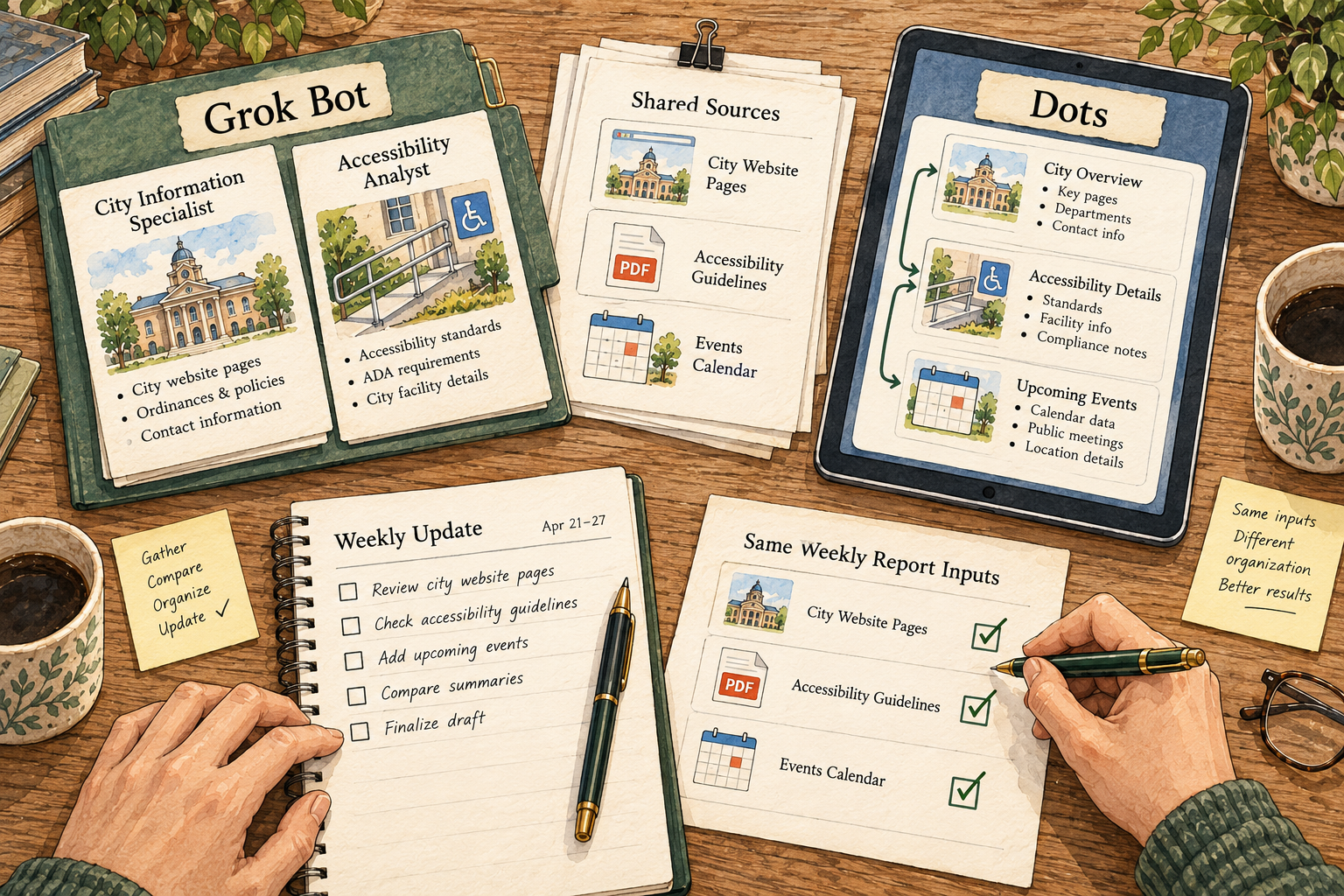
Now suppose your job is a weekly source-based report. You want the same structure, the same review criteria and a stable responsibility over time. Grok’s named Bot and skill/routine model gives you a documented way to describe that work. See Grok’s reusable methods.
The tasks can overlap. A home project still needs a source-linked comparison; a business project still needs follow-up. The useful distinction is whether you want a personal coordinator for changing situations or an explicitly defined work role. Think about the next three jobs you would give it, not just a launch demonstration.
For both, the first task should have a finish line. “Help me with the house” is hard to review. “Compare these three public provider pages, preserve the published hours and prepare an unsent inquiry” gives you something specific to inspect.
Familiar communication can conceal a large access decision
Texting feels simple. The permissions behind the conversation may be extensive. Instinct’s site describes connections involving email, messaging, screen, audio and location; its privacy policy says access depends on permissions and how you engage the service. See Instinct’s privacy policy.
Do not confuse “you can text it” with “it only receives the text you sent.” Before connecting a service, understand whether it can read existing material, copy or index it, and take action through that account. A personal assistant becomes more useful with context, but the context has to be information you mean to share.
Grok’s access model is described in more operational detail: your Bots share files, sign-ins and credentials on an account-level cloud computer. Two different Bot names do not provide two isolated data areas. See Grok’s computer guide.
For a home-repair comparison, you can start without either kind of broad access. Supply the public URLs, your general requirements and a fictional address area. Add real contact details only when they are needed for a specific authorized step. That is a suggested trial arrangement, not a guarantee enforced by either tool.
Know what “do this for me” authorizes
Instinct’s terms permit actions through connected services and describe responsibility for those actions. They do not establish, in the reviewed pages, a universal ask-first switch for every consequential step. Confirm the actual controls before giving it a task that could produce a booking, purchase or commitment.
Grok publishes approval and sensitive-handoff guidance. Its controls still need to match your intended boundary; a role name is not permission enforcement. See Grok’s approval guide.
For either, write the stop point plainly: “Prepare a comparison and an inquiry draft. Do not contact anyone, book a visit or agree to a price.” Then review what the system actually proposes to do. If you cannot establish the action boundary for the real task, keep the exercise at the informational stage.
An approval should cover details, not a general feeling. The provider, appointment date, quoted amount and cancellation terms all affect the decision. “Proceed” after reading only a friendly summary may authorize something you have not fully inspected. Ask for the proposed commitment in one place.
Removing access is different from removing saved information
Instinct’s terms distinguish disconnecting a service from requesting deletion of indexed input. They direct users to the workspace deletion flow and describe model-training choices, including a Vault exception and limits to the opt-out. Those are worth reading before you supply private records.
For Grok, the Bot lifecycle and shared computer also need separate attention. Removing a role does not necessarily remove files and browser sessions that other Bots can still use. See create and manage Bots.
A practical exit plan has three questions: how do you stop future work, revoke future access and remove retained material? These may involve different controls. Do not assume uninstalling an app or deleting a conversation answers all three.
If you need to retain the finished report, save a copy first. If you are removing private source material, check the original storage service too. A generated file saved outside the assistant can have its own lifetime. Your review should distinguish the agent’s remembered context from the documents it created.
Costs and availability remain part of the choice
The Instinct material we checked did not establish a public monthly price or a full regional availability matrix. Its terms contemplate paid features, but that is not a price list. Ask for the current offer, included work and any extra charges before committing. We will not label it free or assign an invented subscription figure.
Grok’s billing guide provides qualifying subscriptions and usage rules. Check the tier you actually have; a linked subscription does not automatically stack extra usage on top of another qualifying plan.
For a trial, compare the total added cost of the task: the agent plan, any outside purchase and your review effort. Keep outside purchases out of the initial comparison so you can judge the assistant without creating a real transaction.
Detailed documentation also saves time. If you need to ask support how a core control works, include that step in your decision. Sparse documentation is not proof that a feature is absent, but it means you should not depend on it until it is confirmed.
A first exercise that suits this pair
Use three public home-service pages and fictional project details. Ask each assistant to identify the services offered, published service areas, stated hours and the questions you would need answered before booking. Request a draft inquiry and keep it unsent.
Check the source for every practical claim. A provider advertising “emergency service” does not automatically promise your address is covered or that a particular time is available. Missing prices should remain questions. The assistant should not turn a general page into a confirmed quote.
Then change one requirement, such as needing weekend availability. Ask for the same comparison to be revised. Did it identify which providers have documented hours and which need a question? Could you locate the evidence quickly? These are proposed checks, not results we measured.
Which would we explore first?
Explore Instinct if the text-and-call personal-assistant approach matches your everyday coordination needs, once its availability, pricing and action controls are clear. Explore Grok Bot if you want named responsibilities and a documented method for repeated work.
Choose neither on personality alone. A good first result preserves missing information, gives you a usable artifact and leaves commitments where you intended. Read Instinct’s profile and Grok Bot’s profile for the details. You should be able to describe what you are delegating before you grant the access that makes it possible.